
Microwave Techniques for Superconducting Quantum Computers
2026.06.09 · Blog microwave techniques in superconducting quantum computers
Why microwaves matter in superconducting quantum computers
Superconducting quantum computers rely on microwave engineering just as much as they rely on low‑temperature physics and chip fabrication. In these systems, microwave signals control qubit states, mediate interactions between qubits, and read out results.
Without robust microwave techniques, it would be impossible to implement high‑fidelity gates, scale to many qubits, or integrate with classical electronics.
Microwave control of qubits
Superconducting qubits act as artificial atoms with discrete energy levels that respond to specific microwave frequencies. Engineers send carefully shaped microwave pulses down coaxial lines into the cryogenic environment to rotate qubit states, implement single‑qubit gates, and create entangling operations.
The pulse frequency, amplitude, and duration determine how the qubit’s quantum state evolves on the Bloch sphere, making waveform engineering a central task for quantum control. Imperfections in these signals directly translate into gate errors.
Readout resonators and measurement
Readout in superconducting quantum computers uses microwave techniques as well. Qubits are often coupled to resonators—microwave cavities or transmission‑line structures—that shift their resonance frequency depending on the qubit state.
By sending a microwave probe tone through the resonator and analyzing its phase or amplitude at room temperature, classical electronics can infer the qubit’s state. This process must be fast and precise while minimizing back‑action that would disturb other qubits.
Microwave multiplexing for large‑scale systems
Scaling up superconducting quantum computers requires feeding microwave signals to many qubits through a limited number of cables. Research teams are developing multiplexing techniques that let engineers address multiple qubits with different frequencies over a single physical line.
For example, multiplexed superconducting circuits demonstrated in Japan have shown that a single cable can control or read out multiple qubits via shared microwave resources, greatly increasing the effective signal density per line. Such techniques directly support larger, more complex quantum processors.
Challenges in microwave engineering for quantum systems
Working with microwaves in a quantum environment introduces unique constraints.
Common challenges include:
-
Losses and reflections in cables and connectors that distort pulse shapes.
-
Crosstalk between neighboring qubits sharing lines or frequency ranges.
-
Limited bandwidth of cryogenic components, filters, and amplifiers.
-
The need to balance high‑power control pulses with the fragility of qubit coherence.
These issues require close collaboration between quantum physicists, RF engineers, and system architects.
SpinQ’s quantum control and measurement systems
SpinQ’s quantum control and measurement (QCM) systems are designed to simplify the microwave layer for superconducting quantum computers. These systems integrate waveform generation, pulse sequencing, synchronization, and readout paths into a coherent hardware‑software stack.
By providing calibrated, high‑performance microwave channels, SpinQ’s QCM systems help users focus on quantum algorithms and experiments rather than low‑level RF engineering. They also align with SpinQ’s superconducting quantum chips and cryogenic deployment services, giving users an end‑to‑end hardware path.
Readers who want to understand how control electronics tie into overall hardware design can explore SpinQ’s article Principles of Superconducting Quantum Computers, which explains how qubits, microwave control, and measurement systems form a complete stack.
Designing microwave setups for superconducting labs
A typical superconducting quantum laboratory combines room‑temperature microwave equipment with cryogenic infrastructure. At room temperature, arbitrary waveform generators, IQ mixers, local oscillators, and digitizers generate and analyze signals.
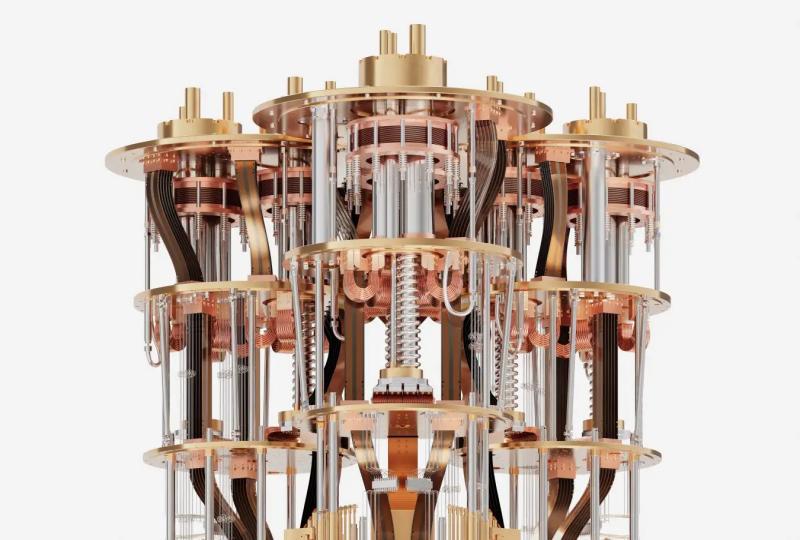
Inside the dilution refrigerator, attenuators, filters, circulators, and low‑noise amplifiers condition these microwave signals before they reach the qubits. System‑level planning ensures that cable routing, thermal anchoring, and component choice support both quantum performance and mechanical reliability.
From R&D to robust microwave stacks
As superconducting quantum computers evolve from single‑chip experiments to enterprise‑grade systems, microwave architectures must mature as well. That means:
-
Standardized control channel configurations
-
Automated calibration and drift compensation
-
Integration with cloud and local orchestration software
-
Clear upgrade paths for higher qubit counts
SpinQ’s portfolio reflects these needs by offering configurable QCM hardware and comprehensive system solutions for organizations at different stages of their quantum journey.
Getting value from microwave‑based quantum hardware
For many teams, the goal is not to become microwave experts but to use quantum hardware to explore new algorithms and applications. Microwave techniques remain essential, but they should be encapsulated in reliable, supported systems.
By working with integrated solutions such as SpinQ’s superconducting platforms and QCM systems, users can access the power of microwave‑controlled qubits while keeping their primary focus on use cases, software stacks, and talent development.
Contenido Destacado